

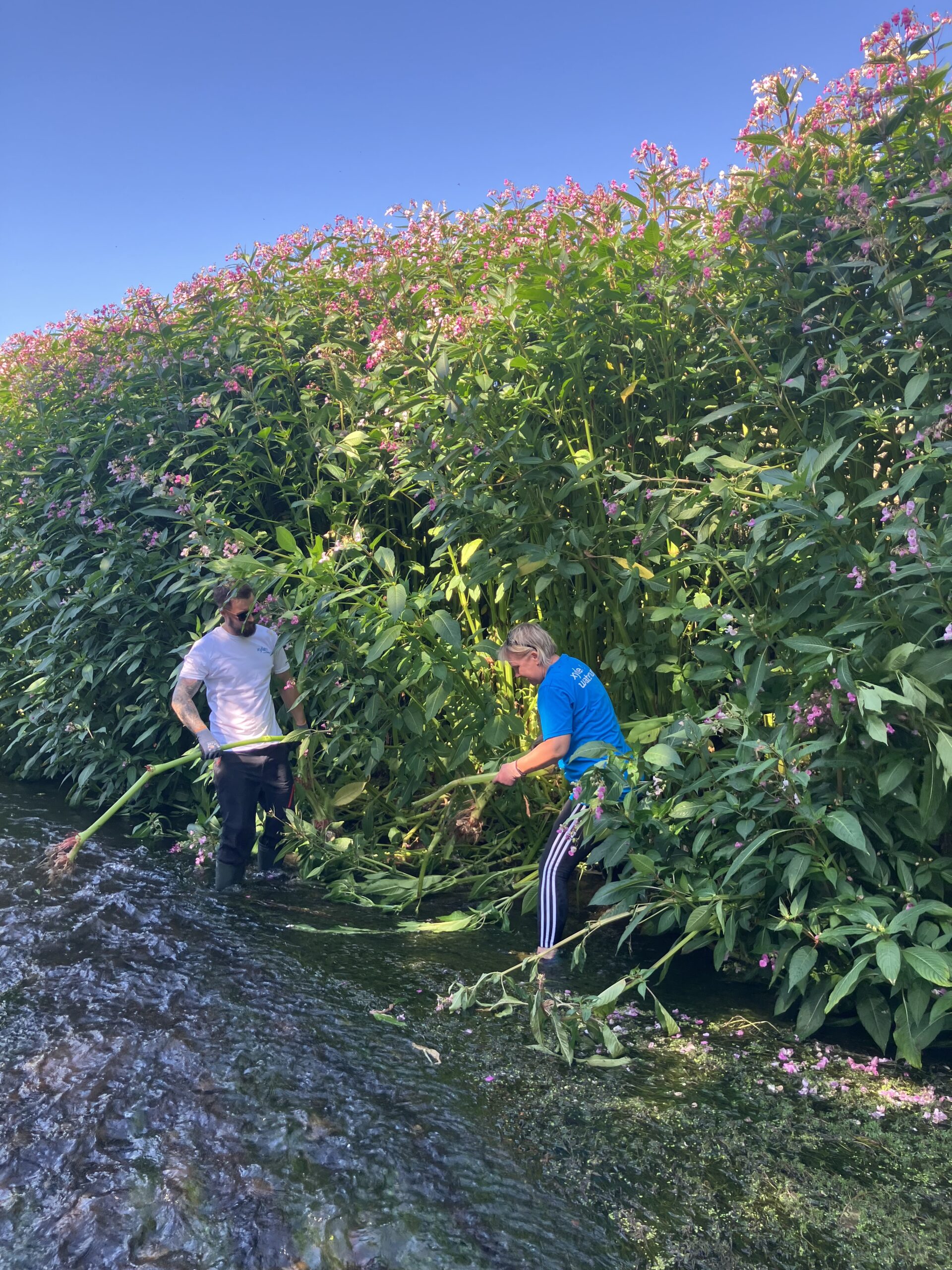
On the banks of the River Axe, a creative experiment to tackle Himalayan balsam shows how collaboration and ingenuity can spark new ideas – even when things go awry!
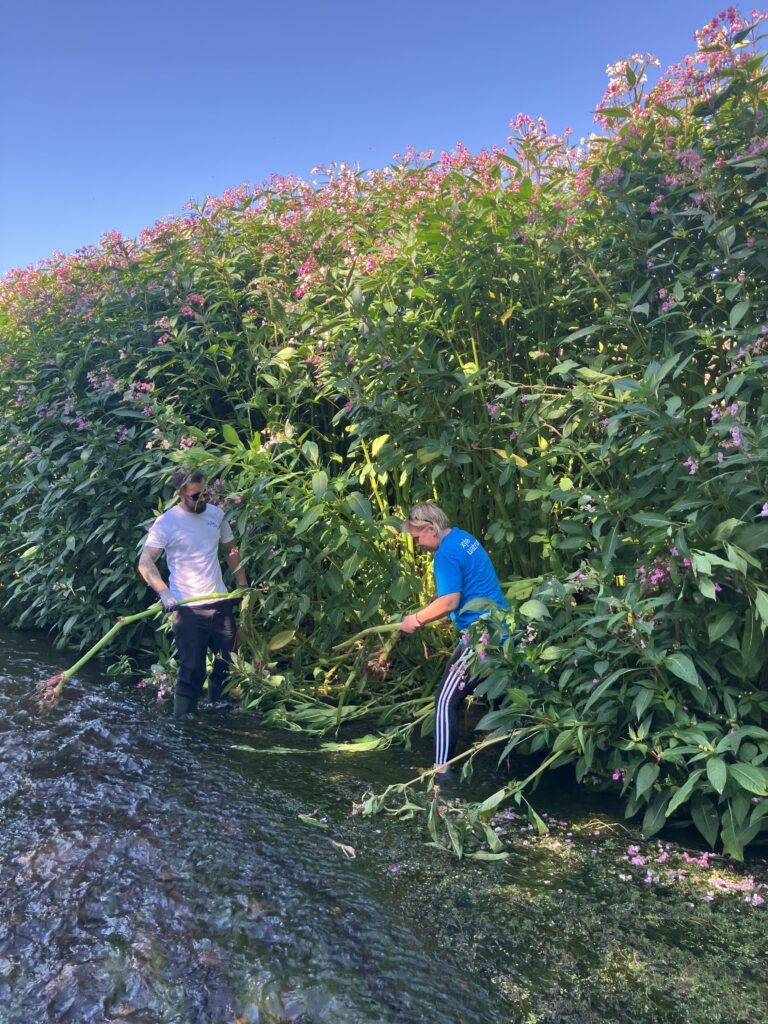
The problem of invasive, non-native species such as Himalayan balsam is complex. Having been introduced to the UK in around 1840 as an ornamental plant, Himalayan balsam uses waterways as a useful pathway for seed dispersal – proliferating rivers, ditches, ponds and even woodlands across the River Axe catchment and the rest of the UK for that matter. As well as competing against native flora for nutrients, light and water, Himalayan balsam has a shallow root system which, when growing on riverbanks, causes increased bank erosion. This leads to high sediment levels in stream, and degraded habitat for burrowing species such as otters, water voles and kingfishers.
Strimming, rust fungus, pulling and chemical control are all tools in the fight against this ‘pretty-in-pink’ invader, but as volunteer groups – or ‘balsam bashers – are aware, long-term eradication takes years of dedication and hard, physical work. There is optimism though, and it is thought that if a whole catchment approach is adopted, starting from the headwaters and working methodically downstream, a balsam-free catchment can be achieved. The Axe’s neighbouring catchment, the River Lim, is a great example of this, with highly motivated and optimistic volunteers working hard in the fight against Himalayan balsam. Read more about work on the River Lim.
In summer 2025, having worked hard restoring some of the natural river features which run through their farm, Leo at Yarty Farm was very aware of the giant stand of balsam which towered well over 6 feet above the river. At around the same time, the Rivers Run Through Us team were talking with Carolyn Dare (passionate about healthy living soils and founder of the Blackdown Hills Eco- Hub) about the potential for biochar to help filter out nutrients that so badly degrade the River Axe and tributaries. This is where it all started to fit together. Could balsam be made into biochar?
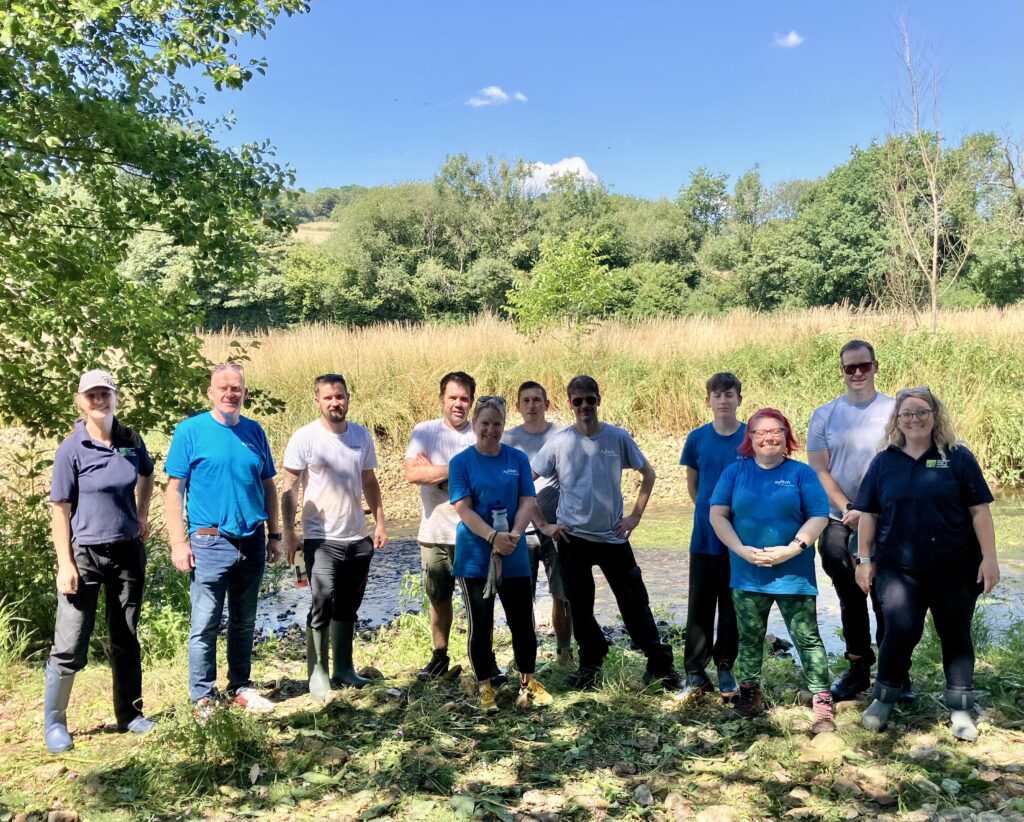
After some research, and the recruitment of a team of volunteers from the local branch of water pump producer, Xylem, the team set about pulling the stand of balsam to begin the trial. After the enthusiastic volunteers pulled a huge section of the plant from the bank, it was left to dry to the water content of less than 20% needed for it to be suitable feed material for the biochar kilns. Drying methods included stacking on palettes, being left on the gravel riverbank, and hung in a fallen tree – well away from the cattle who happily munched grass the other side of an electric fence – or so we thought…
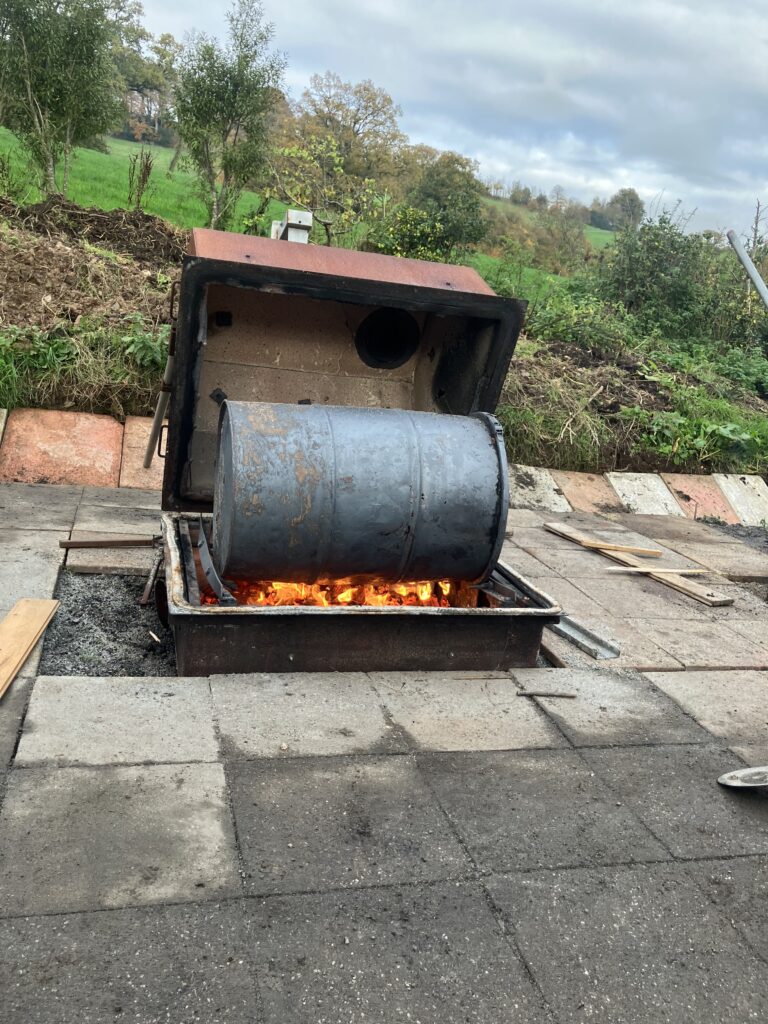
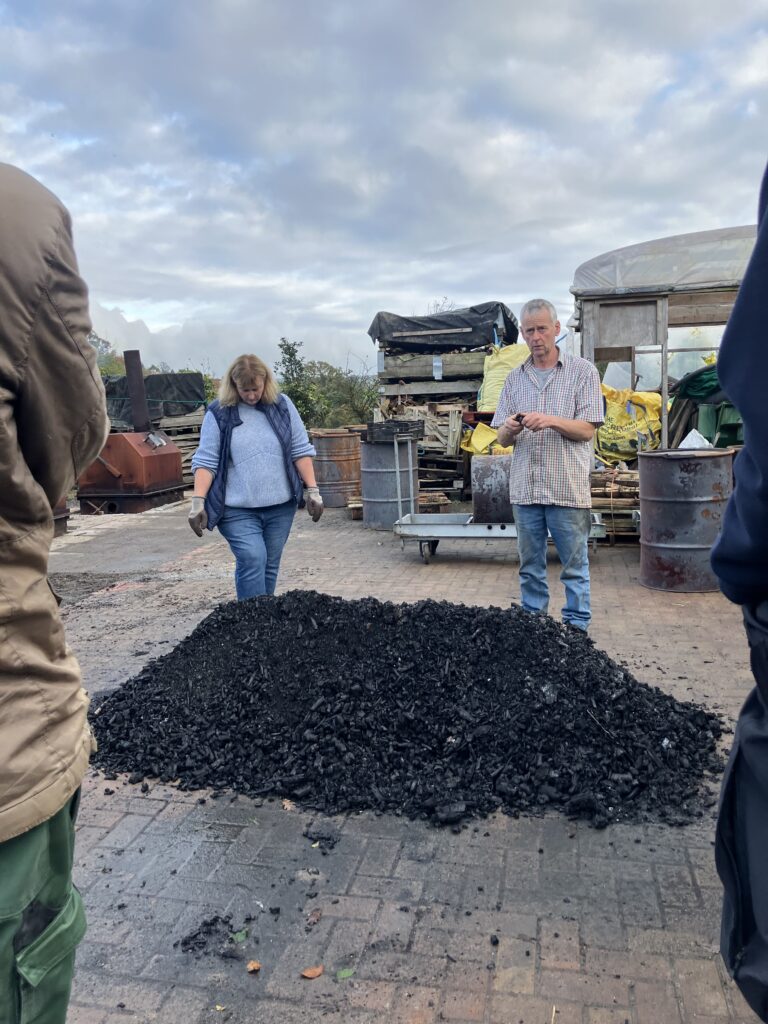
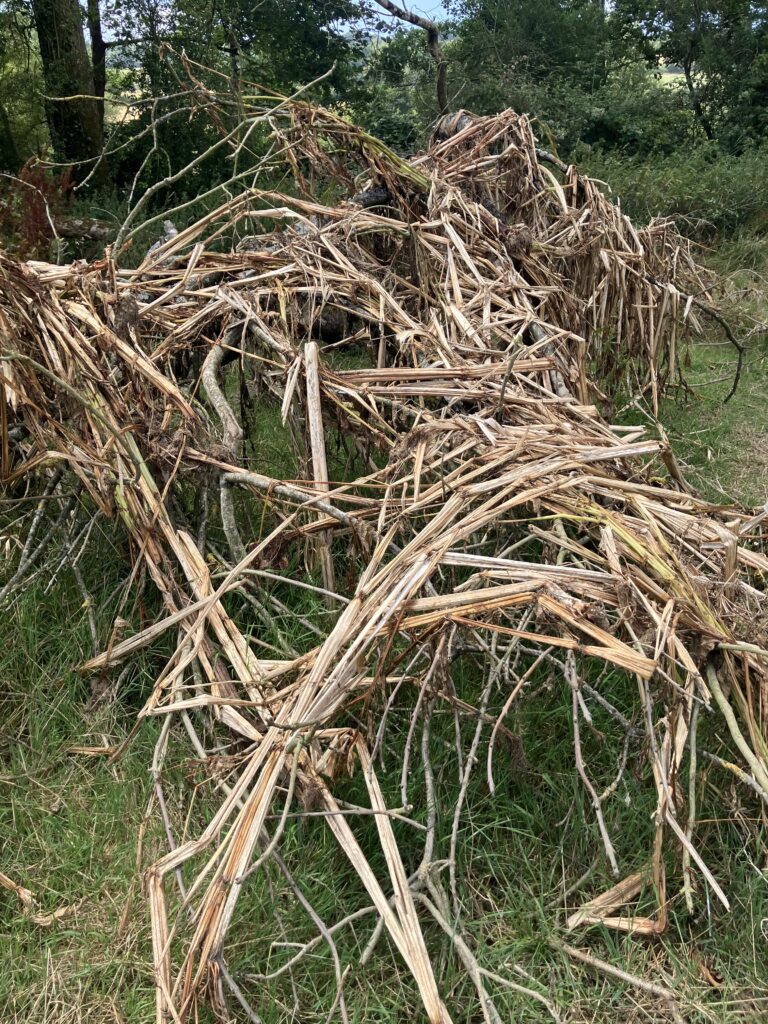
After six weeks or so of regular water content testing, the balsam was dry enough and ready to bake. The team rallied the volunteers again, ready to help feed the kilns and a date was set for the big biochar day. Sadly, it was not to be. The very sweet natured cattle, who the team had been so fond of during the farm visits, had other ideas. In just one sitting, they munched through the entirety of dry balsam, having escaped the electric fence – the only thing standing between them and their invasive prize. They say to never work with children or animals, and on this occasion, we would have to agree. Thankfully, the plant is good for them, and it got us thinking about a potential method for future balsam disposal!
Not ones to admit defeat, the biochar day went ahead. Instead of using the Himalayan balsam to create biochar, the volunteers learnt all about how waste material from farms and woodlands – such as hedge cuttings and ash dieback – can be used. It is a great way of disposing of this waste material, and the resulting biochar can be used on the farm to help reduce nutrient run off into our precious waterways and create incredibly healthy soil systems.
As for the Himalayan balsam, the Rivers Run Through Us team are working to understand how a whole catchment, multi-agency approach can be adopted, working with landowners, farmers, volunteers and statutory bodies to achieve a Himalayan-balsam-free River Axe.
To find out more about volunteering with the River Runs Through Us project, email emily.hobson-martin@devon.gov.uk
Written by: Emily Hobson-Martin