

Volunteering, citizen science and community lab
From monitoring riparian mammals to removing Himalayan balsam, we’re developing a variety of volunteering opportunities for community members to get involved.
We’re also exploring the idea of a community lab – giving people who care about their local environment access to practical resources, such as water quality testing equipment and soil testing opportunities for farmers.
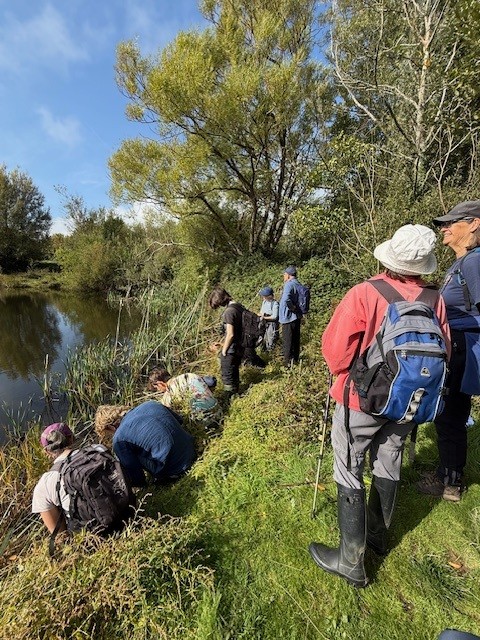
Read on to find out more and how you can take part!
There are many ways to understand the health of a river. See below for an overview of the things you can do to be involved in the great community effort to make our rivers better.
- Water quality monitoring: There are a range of methods that can be used to test the quality of water. If you’d like to be involved in water quality monitoring on the River Axe and tributaries, you can sign up to Westcountry Rivers Trusts Citizen Science Investigations volunteer team. This will provide you with all the relevant training and offers a platform to record your data. This is classed as tier 1 monitoring – feel free to get in touch to find out more.
- Riverfly monitoring: Understanding the invertebrates (creatures with an exoskeleton or no skeleton such as riverfly larvae) which live on the riverbed is an important factor for getting a picture of the health of the river. The Riverfly Partnership are the lead organisation on this in the UK, but you can email emily.hobson-martin@devon.gov.uk to find out more and become a riverfly monitor.
- Riparian mammal monitoring: If you are interested in monitoring the mammals that live alongside the river, get in touch with Emily (emily.hobson-martin@devon.gov.uk) or Harry (harry.shaw@devon.gov.uk). From water voles to otters – and maybe even beavers one day – these animals all play a vital role in keeping our ecosystems healthy.
- Botanical surveys: We are working with a local landowner to provide a training ground for botanical survey enthusiasts. Get in touch to find out more.
Farming
The River Axe catchment has a rich agricultural history which has shaped the landscape, the river and the people who live and work there. We are working with farms and community groups to increase opportunities for people to visit to learn about how they work, the importance of healthy soil and how local communities can support farms in the area.